Zagat guide
American PsychoThe Zagat guide is a recurring restaurant directory and status object in Patrick Bateman’s world. Although it appears to offer practical information about where to eat, Bateman uses it as a social instrument: the guide helps him pursue scarce reservations, stage expensive dinners, rank people and venues, and preserve the polished surface of a life organized around consumption. Its importance lies in the contrast between its orderly listings and the panic, rivalry, cruelty, and identity confusion that surround its use.
Appearance and Social Function
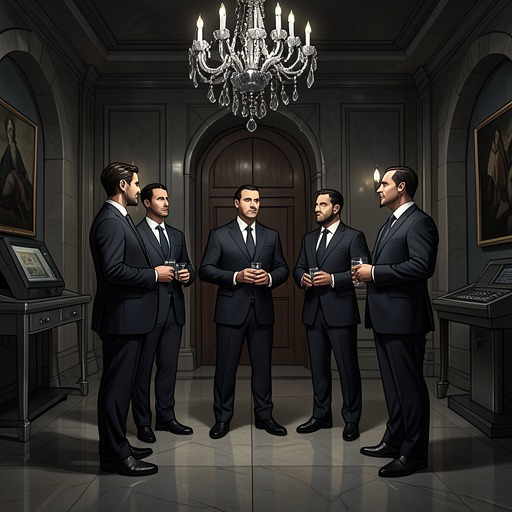
Timothy Price treats the guide as an expected part of an evening’s equipment. When Patrick Bateman, Timothy Price, David Van Patten, and their companions are deciding where to dine, Van Patten produces the long crimson booklet from his pocket and waves it at Timothy. The gesture presents restaurant knowledge as a form of preparedness and cultural competence, even though the group remains unable to settle on what it actually wants to eat. The guide therefore belongs to the same competitive display system as designer clothing, business cards, expensive drinks, and carefully managed manners.
The guide’s authority is inseparable from the people who consult it. A restaurant is valuable not simply because of its food but because of its location within a hierarchy of difficulty, fashion, and social visibility. The booklet converts that hierarchy into something that can be held, searched, and consulted, allowing its users to treat dining as a measurable field of distinction. Its physical presence makes taste look objective while intensifying the need to demonstrate superior taste to other people.
Reservations and Escalating Panic
Bateman turns to the guide most dramatically when he tries to secure a table at Dorsia. After arranging an evening with Patricia, he immediately grabs the guide and searches for the restaurant. The phone line is busy, so he activates Constant Redial and spends five minutes listening to the repeated signal. When someone finally answers, he remains on hold for another five minutes amid the overwhelming noise of the restaurant, gripping the cordless phone so tightly that his palm becomes sweaty and sore.
The guide’s promise of control collapses when the maître d’ laughs at Bateman’s request for a table for two at eight-thirty or nine and abruptly hangs up. Bateman is left with the receiver’s dial tone and the need to recover from what he experiences as a social emergency. He reopens the guide, counts to six, and searches for a substitute venue, eventually obtaining a nine o’clock table at Barcadia only because of a cancellation. The guide thus structures a sequence in which information produces not calm but increasingly precise anxiety: the more clearly Bateman understands the restaurant hierarchy, the more humiliating exclusion becomes.
Control Through Selection
Bateman later uses the guide to shape a dinner with Sean Bateman. He dismisses Pastels and Dorsia as unsuitable, not because they are unavailable alone, but because Dorsia is too fashionable for Sean and would allow him to be distracted by attractive people on their way to Nell’s. Bateman hands the guide to Jean and instructs her to find the most expensive restaurant in Manhattan; she makes a nine o’clock reservation at the Quilted Giraffe.
This episode reveals that the guide is not merely a neutral reference book. Bateman uses it to impose an experience on another person. Choosing the most expensive restaurant becomes a form of punishment and control, while rejecting Dorsia preserves the pleasure of denying Sean access to a more desirable social environment. The guide lets Bateman convert resentment into an itinerary, making status competition appear like ordinary logistical planning.
Disorder Beneath the Listings
The guide’s neat system of restaurants and rankings repeatedly collides with Bateman’s mental and social disintegration. While arranging dinners, he becomes distracted by videotape-return rules, membership privileges, drug use, sexual rivalry, and uncertainty over names and identities. The restaurant directory remains materially stable while the person consulting it becomes less stable. Its listings offer categories, but they cannot settle who is present, what anyone wants, or whether a polished social encounter conceals violence.
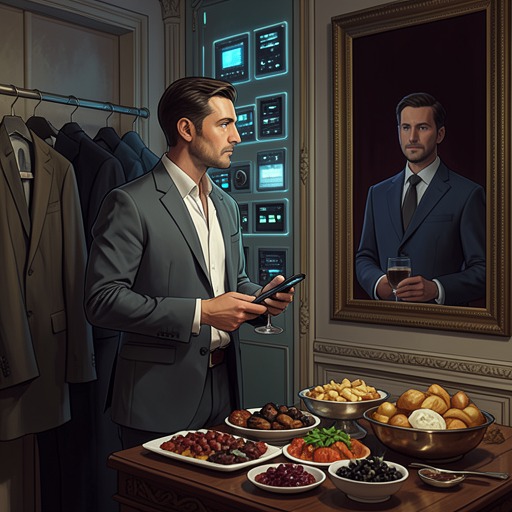
The contrast is especially sharp against Bateman’s public rituals. At Evelyn Richards’s brownstone, he and Timothy Price exchange overcoats and air kisses with Courtney Lawrence while music plays softly in the living room; elsewhere, Bateman displays his business card and watches David Van Patten’s card provoke jealousy. These scenes establish a world in which objects and etiquette sustain an elaborate front. The guide participates in that front by supplying the language of discriminating choice, even as Bateman’s fantasies and actions expose the instability behind it.
Symbolic Significance
The Zagat guide condenses the book’s treatment of consumerism and material status into a single portable object. It promises a map of Manhattan’s elite social geography, yet Bateman’s repeated difficulty obtaining the desired table shows that the map does not grant mastery. Access depends on timing, scarcity, cancellations, names, and the judgment of anonymous gatekeepers. The guide can identify the desirable destination, but it cannot guarantee admission.
Its recurring use also reinforces the narrative’s unreliable relation between surface and reality. Bateman handles the guide with the same seriousness he gives to clothing, grooming, gym membership, water, money, and business cards, treating each as evidence that identity can be assembled through correct choices. Yet the guide’s practical function becomes entangled with humiliation, aggression, sexual rivalry, and fantasies of murder. In that tension, it becomes more than a restaurant directory: it is a material emblem of a culture that reduces experience to rankings and appearances, while revealing how little those systems can contain the person who depends on them.